
Hello genius. Your lived experience is more powerful than your résumé.

What is genius? You might think it means someone who has well above average intelligence. The ability to understand and take action on things that ordinary people can’t.
If you are involved in presenting your ideas in any way, on a blog, at work, or on stage at a conference, it is important to establish how your perspective on a particular topic is unique. Generally by the time you’re ready to present your ideas you’ve nailed down your audience and envisioned the transformation you want to lead them through. Now, the question is: how do you fit into this journey?

Why should they listen to you?
The obvious place to start is your credentials and qualifications, but just listing your past jobs or education without context doesn’t get to the core of what we mean when we talk about your unique genius. That comes from your lived experience, your passion and your curiosity. When talking about your experience, look for the “why” -- not, “I have a degree from MIT”, but “I studied engineering at MIT because I was fascinated with how the world works.”
What is your unique passion on the topic?
In management consulting for instance people are generally trained to be the smartest person in the room – and fairly removed. On that level you are probably in a room full of geniuses. But there’s a reason you’re doing this presentation and not the person next to you. It’s not just that you went to school and got your Phd. There’s something about this topic that’s valuable to you, that you care about. The more you can bring that into the story the better it will be
Simon Sinek, in his now classic TED talk “How Great Leaders Inspire Action,” articulated this really well: People buy from you because they believe what you believe. Revealing more of yourself is more compelling than listing all your gold stars.
The Genius Myth
Mythologist and storyteller Michael Meade has this to say about genius in his book The Genius Myth.
“Given the size, scope and complexity of the problems that currently threaten the world, there can be no single idea, specific political movement, or patented belief system that can save us. Rather all kinds of ingenious solutions are needed; all types of inspiration, and originality are now required.
“Awakening genius is a necessary step on the way to becoming a genuine individual and an active agent in the reimagining of the world.
Rather than a heroic journey undertaken by a select few, the genius myth imagines that everyone, by virtue of bearing some genius qualities, is subject to a genuine calling in life.
Everyone has some gift to give if they learn to give from their essential nature.
Whether it comes as a daunting challenge or a crushing blunder, a big dream or a cutting loss, each major life event has within it an opportunity to awaken to the call of a deeper self and the resident genius of the soul.
In transforming each of us, genius also transforms the world.”
Whether you are talking about mining asteroids or your ideas about mindfulness in the workplace, connecting to your insights from a place of inner genius will make the difference between imparting merely useful information and something that will connect with your audience on a deeper level.
Got Impostor Syndrome? Good.
On the one hand, if you are up on stage holding forth about a topic or idea, a big part of the audience is already inclined to see you as “the expert.” If you are presenting to an audience full of experts or even amateur enthusiasts, you are going to need to prove yourself. That’s why standing up as an “expert” is often tricky.
Here are the three primary concerns we hear: “Do I know enough? Am I ready?” This idea is talked about so much -- what more can I add? How do I talk about myself without overpowering what I have to share?
One client (a brilliant and nerdy management consultant) said “I want to be as memorable as my topic -- but I don’t want to appear self-serving.”

First, let’s address imposter syndrome. Most of us have some of this! Author and entrepreneur Seth Godin, has a great blog post on the topic. He says:
“Yes, you're an impostor. So am I and so is everyone else. Superman still lives on Krypton and the rest of us are just doing our best.
Isn't doing your best all you can do? Dropping the narrative of the impostor isn't arrogant, it's merely a useful way to get your work done without giving into Resistance.
Time spent fretting about our status as impostors is time away from dancing with our fear, from leading and from doing work that matters.”
Author Elizabeth Gilbert talks about having a genius vs. being a genius. Your unique genius is something you can cultivate.
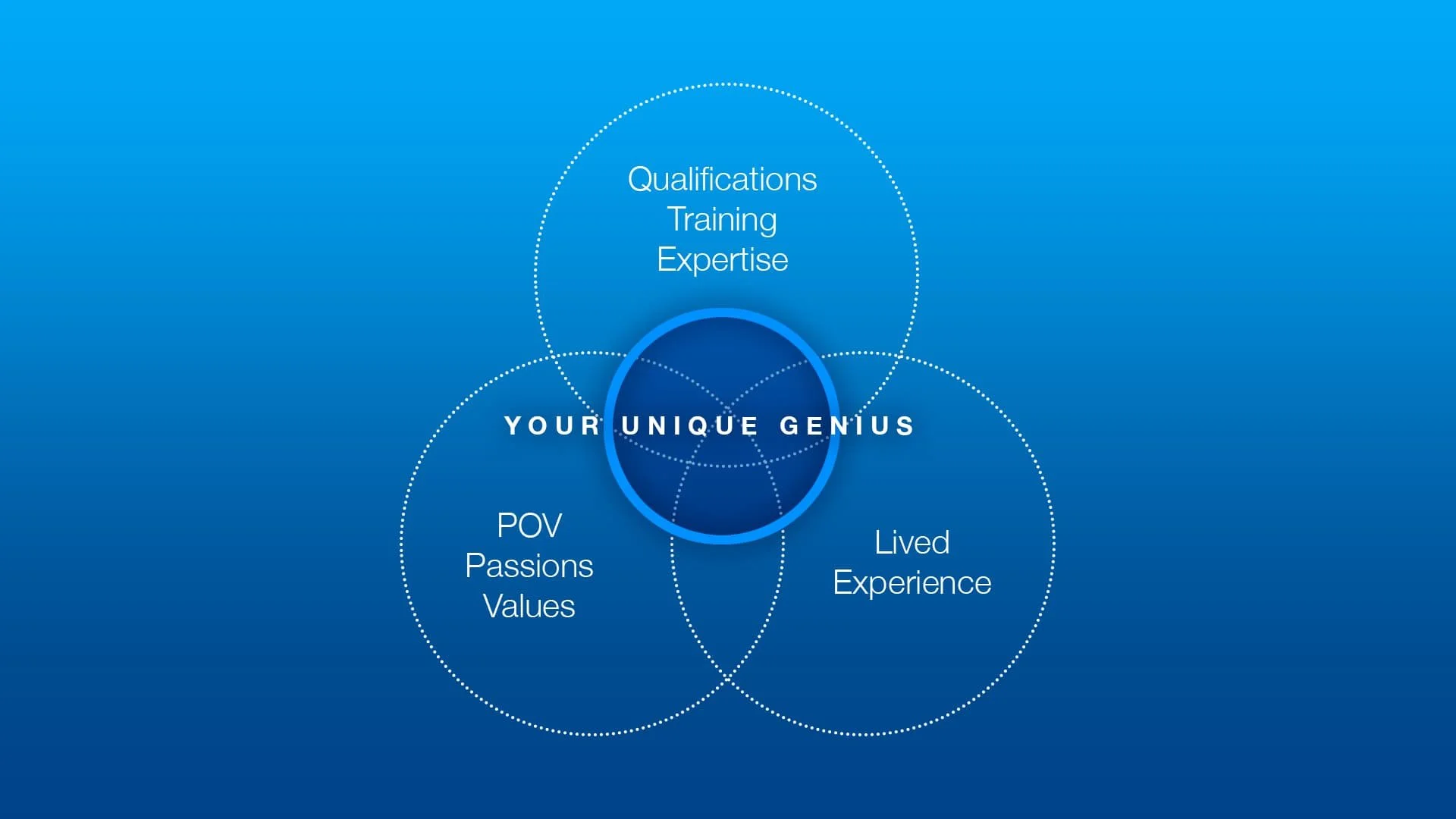
Your genius is the alchemy of what makes you, you as well as how you interact with your idea.
It is a combination of your qualifications, training and personal experience, mixed with your point of view, your passions and your values filtered through your life experience.
Resilience = Brilliance
The key to unlocking your genius is often found in adversity. What was the turning point that led you to where (and who) you are now?
A common question we ask clients is: what challenge or adversity did you overcome especially when you were younger that you observe has become your superpower today?

The Artist
Here’s an example: Humanitarian photographer Lisa Kristine grew up in a stressful and unsafe environment. She found solace in her mother’s National Geographics and dreamed of one day visiting those far off places where indigenous people in particular seemed to have a more grounded and connected way of life. As soon as she could, she started to travel with her camera as a way to connect. She’s captured images and stories both terrifying and sublime, and her genius is the ability to be fully present for both.
The Entrepreneur
Author and hospitality pioneer Chip Conley has always used his genius to get him out of tight spots and it almost always led him to another level from where he was. When his hospitality business was failing he took inspiration from psychologist Abraham Maslow’s hierarchy of needs and applied it to the structure of his business.
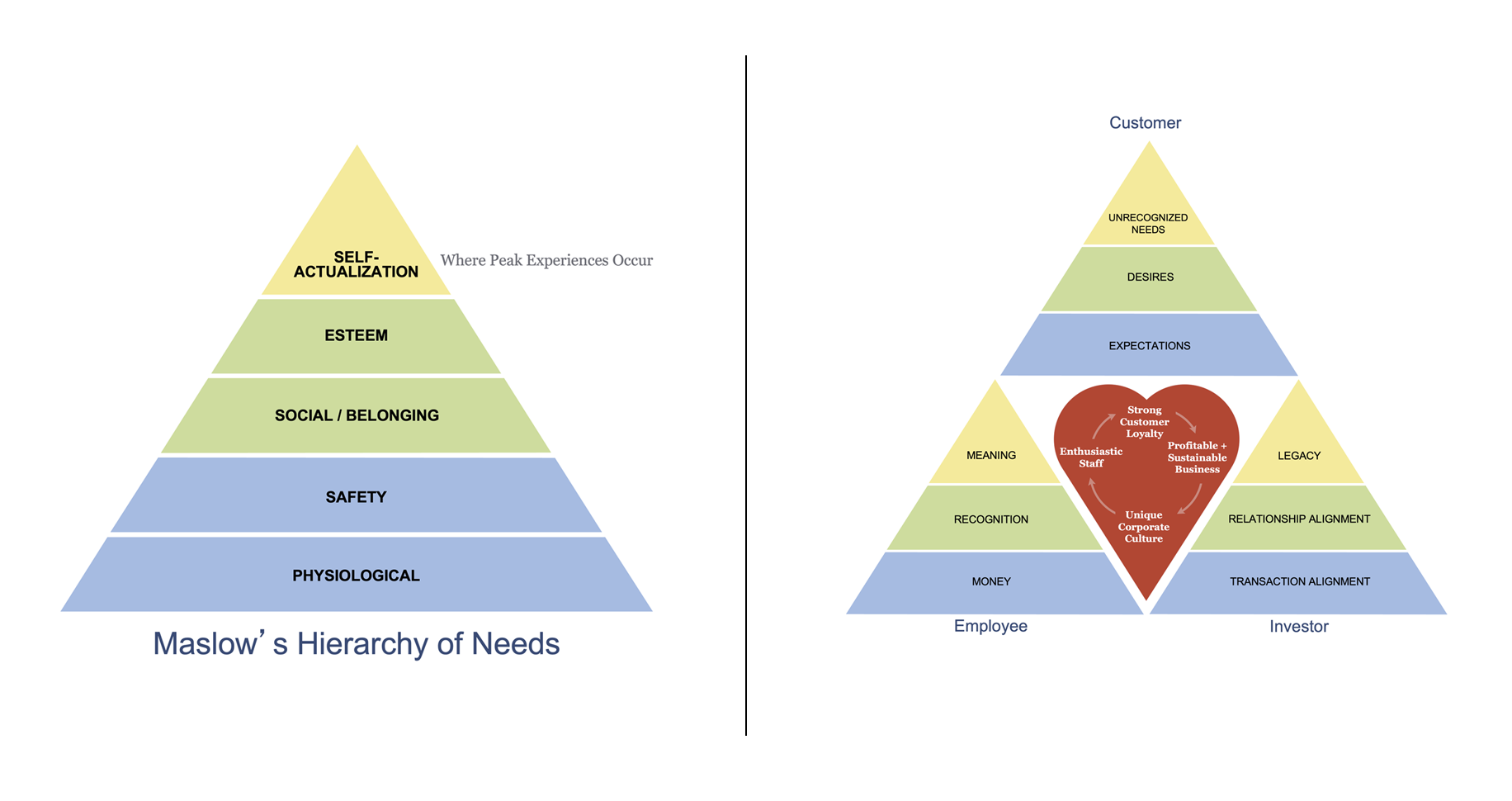
Chip’s genius is reinterpreting ideas and methodologies from seemingly unrelated fields and adapting them to his particular challenge. His latest genius inspiration stemmed from his experience in semi-retirement being essentially both an apprentice and a mentor to the tech wizards at AirBnb.
In realizing he was both mentor and mentee (a “mentern” as he calls it) he created a whole movement around what it means to be a “Modern Elder”. Taking from ancient history the idea of the mystery school and channeling that into what he calls a wisdom school, he and his team are giving people from all walks of life and levels of experience the opportunity to reimagine themselves and their careers at a time when most people begin to feel obsolete and overlooked.

Soul Genius
In the end, as Michael Meades says: “your unique genius can always be found at the level of the soul.” It can be as simple as being a good listener or as profound as understanding the nature of the space-time continuum, what matters is what you do with it.
Further Reading:
Michael Meade:
The Genius Myth
Elizabeth Gilbert:
Big Magic. Creative Living Beyond Fear
Chip Conley:
PEAK. How Great Companies Get Their Mojo from Maslow
Wisdom at Work. The Making of a Modern Elder
Blogs
Seth Godin on Impostor Syndrome
Ryan Holiday: You’re Not a Genius
Lisa Kristine
Experiences:
Michael Meade/Mosaic Voices Events
Podcasts:
Michael Meade’s Living Myth Podcast:
The Path of Genius and Calling
Chip and MEA
The Rich Roll Podcast with Chip Conley